

Call us now
08045476623

 Send Inquiry
Glass Polishing Machine
Price 14000 INR/ Unit
MOQ : 1 Unit
Glass Polishing Machine Specification
- Model No
- GP-900
- Control System
- PLC Control Panel
- Operating Temperature
- 5C40C
- Lubricating System
- Centralized Lubrication
- Frequency
- 50 Hz
- Voltage
- 380 V
- Cooling System
- Water Cooling
- Noise Level
- <75 dB
- Frame Type
- Heavy Duty Welded Frame
- Accuracy
- 0.05 mm
- Drive
- Belt Drive
- Power Rating
- 3 kW
- Features
- Sturdy Construction, Energy Efficient, Easy Operation
- Motor Power
- 3 kW
- Production Capacity
- 12 m/hour
- Machine Type
- Glass Polisher
- Product Type
- Glass Polishing Machine
- Technology
- Advanced Abrasive Polishing
- Power Source
- Electricity
- Operating Type
- Semi Automatic
- Power
- 3 kW
- Pressure
- Adjustable up to 0.6 MPa
- Surface Treatment
- Painted
- Dimension (L*W*H)
- 1800 mm x 900 mm x 1200 mm
- Weight (kg)
- 800
- Color
- Blue & Silver
- Usage & Applications
- Glass Edge Polishing, Flat Glass Polishing
- Operator Requirement
- 1 Person
- Min Glass Size
- 100 mm x 100 mm
- Safety Standards
- CE Certified
- Water Consumption
- 80 L/hr
- Max Glass Thickness
- 25 mm
- Belt Material
- Reinforced Rubber
- Abrasive Type
- Diamond / Resin Wheel
- Number of Polishing Stations
- 9
- Emergency Stop
- Yes
- Packing
- Wooden Crate
- Edge Types Supported
- Flat, Bevel, Round
Glass Polishing Machine Trade Information
- Minimum Order Quantity
- 1 Unit
- Payment Terms
- Cash Advance (CA), Cash in Advance (CID)
- Supply Ability
- 50 Units Per Month
- Delivery Time
- 1 Week
- Sample Available
- Yes
- Sample Policy
- Sample costs shipping and taxes has to be paid by the buyer
- Main Export Market(s)
- Asia, Australia, Central America, North America, South America, Eastern Europe, Western Europe, Middle East, Africa
- Main Domestic Market
- All India, South India, Central India, West India, North India, East India, Gujarat, Karnataka, Kerala, Lakshadweep, Mizoram, Meghalaya, Manipur, Andhra Pradesh, Bihar, Chandigarh, Daman and Diu, Goa, Jharkhand, Odisha, Punjab, Assam, Delhi, Dadra and Nagar Haveli, Andaman and Nicobar Islands, Arunachal Pradesh, Chhattisgarh, Haryana, Himachal Pradesh, Jammu and Kashmir, Madhya Pradesh, Maharashtra, Nagaland, Rajasthan, Sikkim, Tamil Nadu, Telangana, Tripura, Pondicherry, Uttar Pradesh, Uttarakhand, West Bengal
About Glass Polishing Machine
Glass Polishin
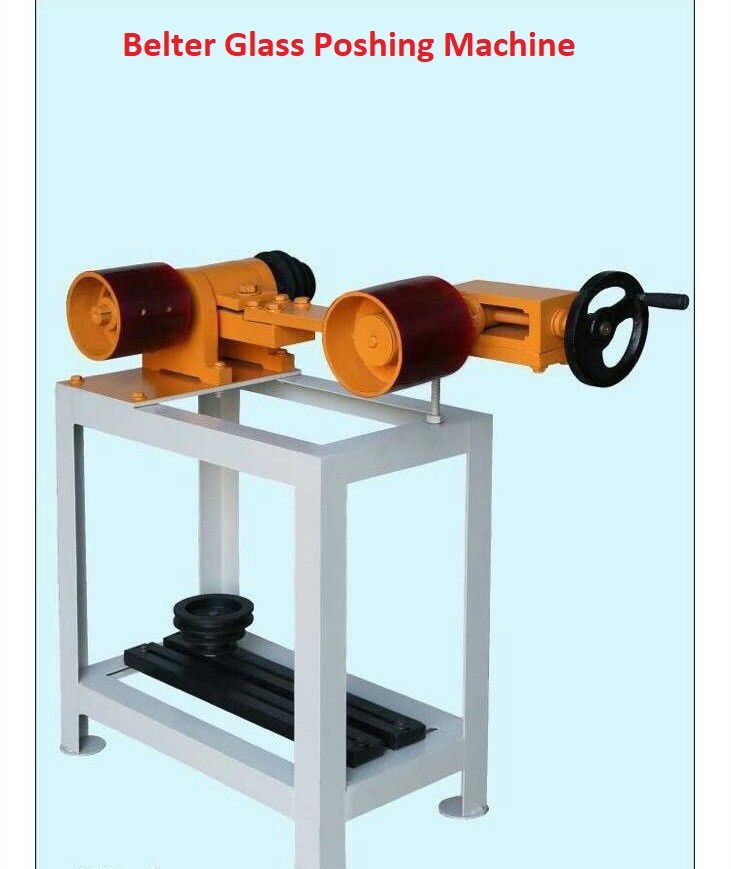
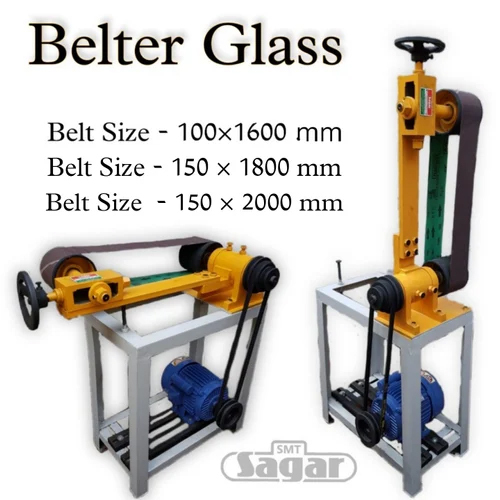
Belter Glass Polishing
A glass polishing machine is a specialized piece of equipment designed for polishing and finishing glass surfaces. It is commonly used in the glass manufacturing industry to achieve a smooth and polished appearance on glass products. Glass polishing machines are essential for improving the aesthetic quality of glass, removing scratches, and enhancing clarity.
Here are some key features and aspects of glass polishing machines:
Spindle System: Glass polishing machines typically have a spindle system that holds polishing wheels or belts. These polishing tools are used to buff and polish the glass surface.
Polishing Wheels or Belts: Various types of polishing wheels or belts may be used, depending on the specific requirements of the glass polishing process. These may include abrasive wheels, felt wheels, or diamond-impregnated wheels.
Water Cooling System: Glass polishing generates heat, and to prevent the glass from overheating and potentially cracking, many glass polishing machines are equipped with a water cooling system. This system helps to keep the glass and polishing tools at an optimal temperature during the polishing process.
Adjustable Settings: Glass polishing machines often have adjustable settings for controlling factors such as the pressure applied to the glass, the speed of the polishing tools, and the angle of contact. These settings allow operators to tailor the polishing process to the specific requirements of different glass products.
Automation and CNC Control: Some advanced glass polishing machines may incorporate automation features and computer numerical control (CNC) technology. This allows for precise control over the polishing process, reducing the need for manual intervention and ensuring consistent results.
Applications: Glass polishing machines are used in the production of various glass products, including architectural glass, automotive glass, glass furniture, and decorative glass items. They are employed to remove imperfections, scratches, and rough edges from glass surfaces, improving the overall quality and appearance of the glass.
Safety Features: Safety is a crucial consideration in glass polishing machines. Safety features may include emergency stop buttons, protective enclosures, and systems to manage dust and debris generated during the polishing process. Quality Control: Glass polishing machines play a role in quality control by ensuring that glass products meet specific standards for clarity, smoothness, and surface finish. It's important to note that the features and capabilities of glass polishing machines can vary depending on the specific model and manufacturer. The choice of a glass polishing machine depends on factors such as the type of glass being processed, the desired finish, and the production volume.
Versatile Edge Polishing Capability
The GP-900 accommodates diverse edge types, including flat, bevel, and round finishes, making it suitable for a wide range of glass polishing applications. Its advanced abrasive technology, combined with a robust nine-station setup, ensures consistent results on different glass sizes and thicknesses. This versatility enhances productivity for manufacturers and processors handling varied requirements.
Cutting-Edge Performance and Precision
With a powerful 3 kW motor and state-of-the-art PLC controls, the machine achieves high throughput-up to 12 m2/hour-while maintaining a tolerance of 0.05 mm. Adjustable pressure settings up to 0.6 MPa and centralized lubrication contribute to smooth and precise operation. Combined with water cooling, the machine delivers reliable performance even during continuous use.
Operator Safety and Ease of Use
The GP-900 Glass Polishing Machine meets CE safety standards and features emergency stop functionality, ensuring user protection during operation. Designed for easy handling by a single operator, its semi-automatic workflow and ergonomic control panel streamline maintenance and daily use. Sturdy painted construction and noise levels below 75 dB further enhance workplace safety and comfort.
FAQ's of Glass Polishing Machine:
Q: How does the GP-900 Glass Polishing Machine achieve precise finishes on different glass edges?
A: The GP-900 uses reinforced rubber belts and a combination of diamond and resin abrasive wheels across nine polishing stations. Adjustable pressure (up to 0.6 MPa), PLC-controlled settings, and a water cooling system work together to ensure polished edges with consistent accuracy within 0.05 mm on flat, bevel, and round edge types.Q: What are the minimum and maximum glass sizes that this machine supports?
A: The machine can process glass with a minimum size of 100 mm x 100 mm and a maximum thickness of 25 mm, providing flexibility for both small and large glass components.Q: When should regular maintenance and lubrication be performed on the GP-900?
A: Routine maintenance should follow the manufacturer's schedule, generally involving checks after every major production cycle. The centralized lubrication system simplifies this task, keeping the machine running smoothly and extending its operational life.Q: Where is the GP-900 suitable for installation and operation?
A: The GP-900 is ideal for factories, workshops, and industrial glass processing facilities in India and abroad. Its heavy-duty construction and moderate footprint allow placement in standard production environments operating between 5C and 40C.Q: What is the process for edge polishing using this machine?
A: Operators place glass pieces on the input station, select the desired edge type via the PLC control panel, and start the semi-automatic polishing process. The glass passes through nine abrasive stations while water cooling ensures optimal surface quality and minimizes heat-related damage.Q: How does using the GP-900 benefit manufacturers or glass processors?
A: By automating edge finishing with high accuracy, the GP-900 reduces manual effort, increases production rates (up to 12 m2/hour), and ensures consistent quality. Its energy efficiency, safety features, and ergonomic operation lower operational costs and improve workplace safety.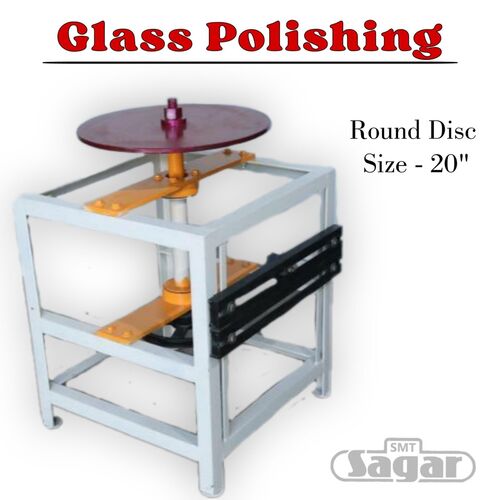
Tell us about your requirement

Price:
Quantity
Select Unit
- 50
- 100
- 200
- 250
- 500
- 1000+
Additional detail
Mobile number
Email


SAGAR MACHINE TOOLS
GST : 24EWJPS9029A1ZE
GST : 24EWJPS9029A1ZE
J.K Industrial Area, Survey No.149, Plot No.11, Kotda Sangani Main Road, Rajkot - 360022, Gujarat, India
Phone :08045476623

 Send Inquiry
- LATHE MACHINE
- Press Brake Machine
- Blade Grinding Machine
- Circle Cutting Machine
- Circular Saw Machine
- Industrial Drill Machine
- Jigsaw Machine
- Milling Cum Drilling Machine
- Pipe Bending Machine
- Section Bending Machine
- Shearing Machine
- Grinder
- Sheet Grooving Machine
- Welding Machine
- Air Compressor
- Pressure Pump
- Air Blower Machine
- Bench Grinder Machine
- Tapping Machinery
- Tapping Cum Drilling Machines
- Radial Drill Machinery
- Slotting Machines
- Hack Saw Machine
- Cutt Off Machine
- Concrete Block Cutting Machinery
- Milling Machinery
- Sander Machinery
- Glass Polishing Machine
- Shaping Machine
- Belt Grinding Machinery
- Bandsaw Machinery
- Turning And Facing
- Abrasive Belt Grinding
- Belt Grinder Polisher
- Hydraulic Press
- Power Press
- Press
- Hydraulic Multi Cutter Machine
- Stapler
- Jenny
 Send Inquiry
 Send SMS
SAGAR MACHINE TOOLS
All Rights Reserved.(Terms of Use)
Developed and Managed by Infocom Network Private Limited.
Developed and Managed by Infocom Network Private Limited.

