
Call us now
08045476623

 Send Inquiry
Abrasive Belt Grinding Machines
Price 36000 INR/ Unit
MOQ : 1 Unit
Abrasive Belt Grinding Machines Specification
- Model
- Custom / As per Order
- Rotation
- Unidirectional
- Product Type
- Abrasive Belt Grinding Machine
- General Use
- Manual and Semi-Automatic Metal Sanding & Deburring
- Material
- Mild Steel Body, Heavy Duty Construction
- Type
- Belt Grinder
- Capacity
- Heavy Duty, up to 60 kg load
- Weight (kg)
- Approx. 140 Kg
- Computerized
- No
- Automatic
- Semi-Automatic / Manual
- CNC Or Not
- Not CNC
- Control System
- Manual
- Table Size
- 450 x 150 mm (Approx.)
- Table Slide Way
- Manual/Linear
- Grinding Wheel Size
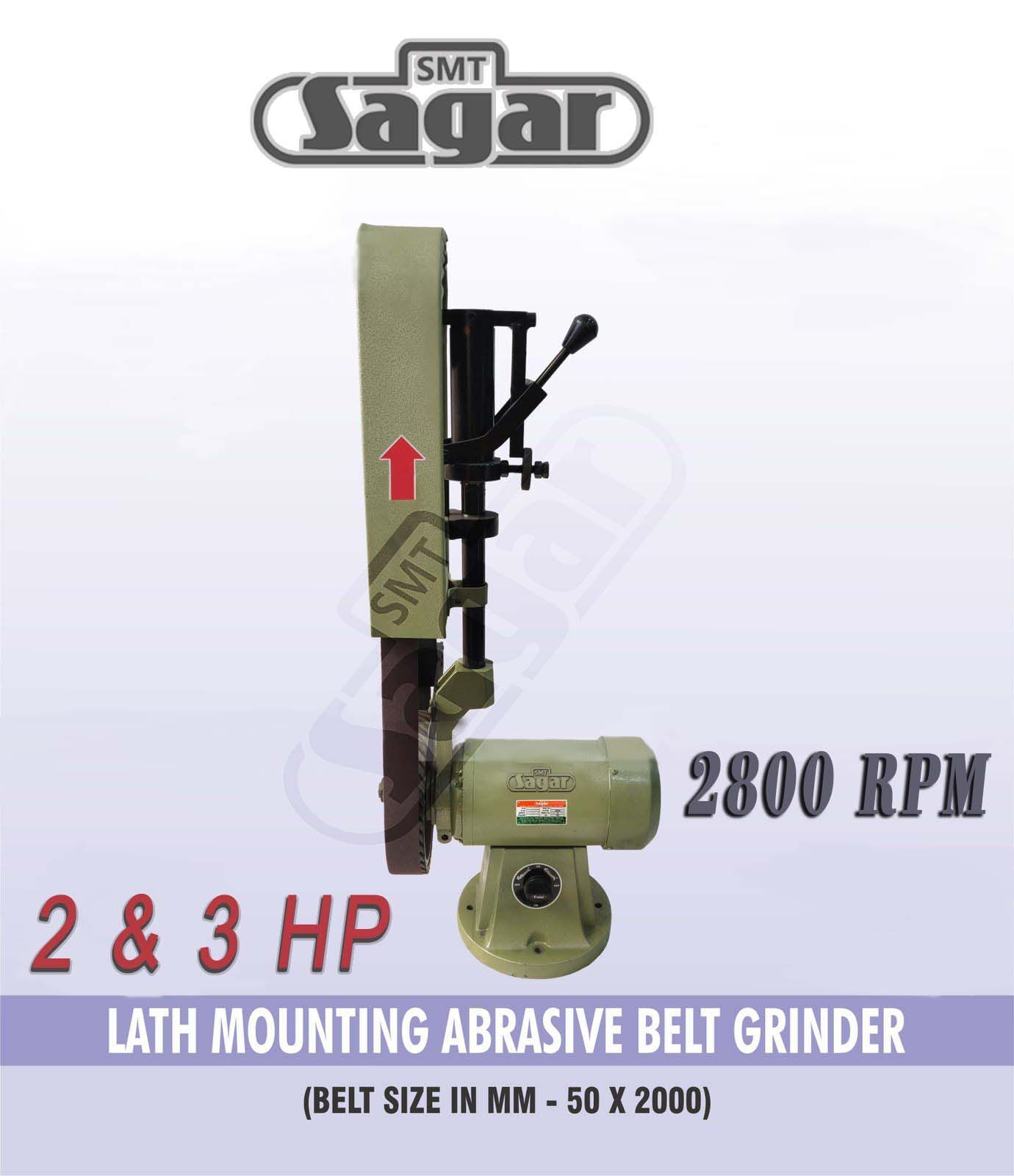
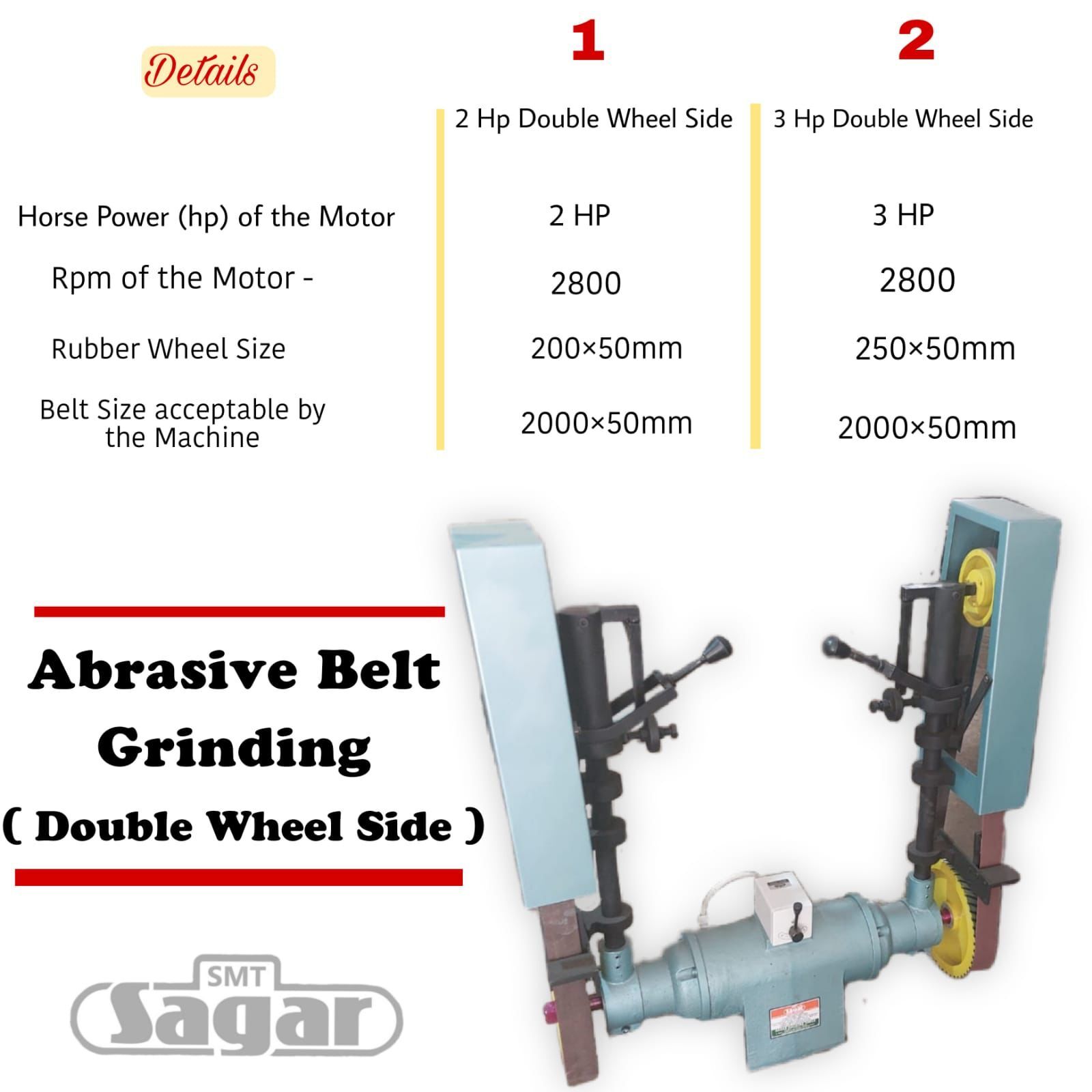
- 50 x 2000 mm (Standard belt size; custom sizes available)
- Grinding Wheel Speed
- 1440 RPM
- Grinding Length
- Approx. 440 mm
- Floor Space
- 900 mm x 500 mm x 1200 mm (L x W x H)
- Spindle Speed
- Single Speed / 1440 RPM
- Power
- 2 HP
- Voltage
- 415 V / 50 Hz, Three Phase
- Dimension (L*W*H)
- 900 x 500 x 1200 mm
- Feature
- Easy Belt Changing, Low Maintenance, Sturdy Design
- Color
- Grey / Blue (as per manufacturer)
- Dust Collector Port
- Optional / As per requirement
- Belt Size (mm)
- 50 x 2000 mm
- Accessories Included
- Belt, Tool Kit, User Manual
- Noise Level
- < 85 dB
- Motor Protection
- Thermal Overload Protection
- Abrasive Type
- Aluminium Oxide / Silicon Carbide compatible
- Drive System
- Direct Drive Electric Motor
- Safety Features
- Emergency Stop, Belt Guard
- Application
- Deburring, Surface Finishing, Descaling, Metal Fabrication
- Belt Tensioning
- Manual Hand Lever
Abrasive Belt Grinding Machines Trade Information
- Minimum Order Quantity
- 1 Unit
- Payment Terms
- Cash Advance (CA), Cash in Advance (CID)
- Supply Ability
- 10 Units Per Month
- Delivery Time
- 1 Week
- Sample Available
- Yes
- Sample Policy
- Sample costs shipping and taxes has to be paid by the buyer
- Main Export Market(s)
- Asia, Australia, Central America, North America, South America, Eastern Europe, Western Europe, Middle East, Africa
- Main Domestic Market
- All India, South India, Central India, West India, North India, East India, Gujarat, Karnataka, Kerala, Lakshadweep, Mizoram, Meghalaya, Manipur, Andhra Pradesh, Bihar, Chandigarh, Daman and Diu, Goa, Jharkhand, Odisha, Punjab, Assam, Delhi, Dadra and Nagar Haveli, Andaman and Nicobar Islands, Arunachal Pradesh, Chhattisgarh, Haryana, Himachal Pradesh, Jammu and Kashmir, Madhya Pradesh, Maharashtra, Nagaland, Rajasthan, Sikkim, Tamil Nadu, Telangana, Tripura, Pondicherry, Uttar Pradesh, Uttarakhand, West Bengal
About Abrasive Belt Grinding Machines
Sagar Machine Tools
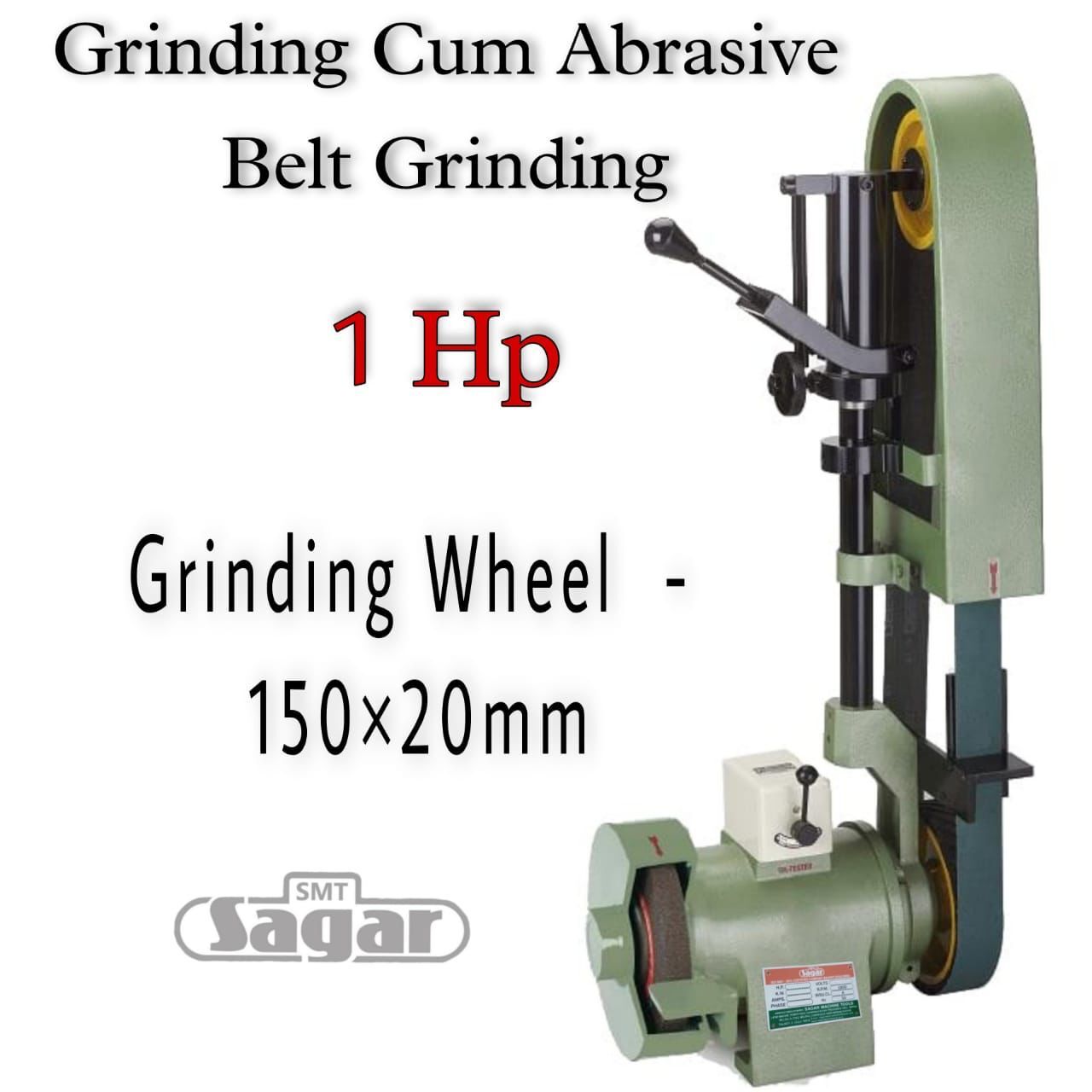
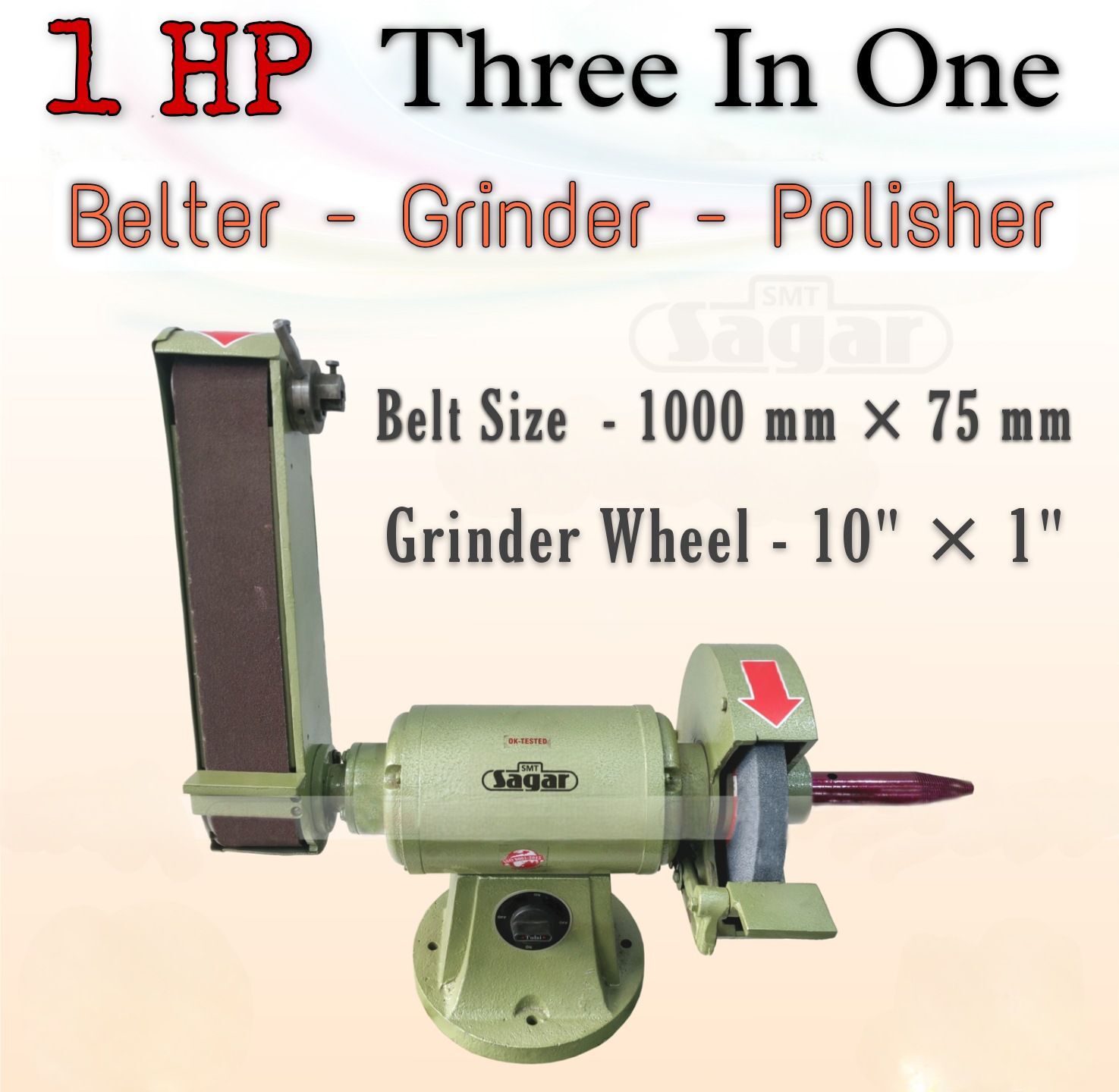
We are Manufacture of All Type of Abrasive Grinding Machine
Abrasive belt grinding machines are industrial machines that use coated abrasive belts to remove material from a workpiece. These machines are commonly used in metalworking, woodworking, and other manufacturing applications for tasks such as deburring, surface finishing, and shaping. Here are some key features and functions of abrasive belt grinding machines:
Abrasive Belt:
These machines use abrasive belts made of coated abrasives, such as aluminum oxide, silicon carbide, or zirconia alumina. The abrasive belt is wrapped around rotating drums or pulleys.
Belt Tracking and Tensioning:
Abrasive belt grinding machines typically have mechanisms for tracking and tensioning the abrasive belt. This ensures that the belt stays properly aligned and tensioned during the grinding process.
Contact Wheel:
The abrasive belt makes contact with a rotating contact wheel or worktable. The choice of contact wheel size and material affects the grinding performance and finish.
Variable Speeds:
Many abrasive belt grinding machines have variable speed controls, allowing operators to adjust the belt speed based on the material being processed and the desired finish.
Workpiece Fixturing:
Workpieces are usually secured on a worktable or fixture during the grinding process. The worktable may be adjustable in different directions to accommodate various shapes and sizes of workpieces.
Wet or Dry Grinding:
Depending on the application and machine design, abrasive belt grinding machines may perform wet or dry grinding. Wet grinding is often used to reduce heat and control dust during the grinding process.
Dust Extraction:
Dust extraction systems are commonly integrated into abrasive belt grinding machines to remove and collect the dust generated during the grinding process, improving workplace safety and maintaining a clean working environment.
Applications:
Abrasive belt grinding machines are used for a variety of applications, including deburring, edge rounding, surface finishing, stock removal, and shaping of metal, wood, plastics
Versatile Performance for Metalworking
This abrasive belt grinder is engineered for versatility, excelling in deburring, descaling, and surface finishing. The machine's compatibility with different abrasive types-aluminium oxide and silicon carbide-enables tailored results on various metals for workshops and factories. Its sturdy mild steel construction and heavy-duty capacity make it well-suited for demanding fabrication environments.
User-Friendly Operation and Maintenance
Designed for ease of use, the machine features a user-friendly belt tensioning system and easy belt replacement. Its manual or linear table slide way ensures smooth workpiece handling, and standard accessories include a tool kit and user manual to simplify installation and upkeep. The system's low noise level and reliable thermal overload protection prioritize operator safety.
Built for Safety and Efficiency
Fitted with a robust emergency stop and belt guard, operator safety is a top priority. An optional dust collector port helps maintain a clean workspace. The direct drive motor delivers consistent 1440 RPM speed, ensuring high-quality finishes while minimizing vibration and maintenance frequency, making it a practical choice for industrial metalworking tasks.
FAQ's of Abrasive Belt Grinding Machines:
Q: How does the abrasive belt grinding machine operate for deburring and surface finishing jobs?
A: The machine uses a rotating abrasive belt (50 x 2000 mm) powered by a direct drive electric motor to remove burrs, scale, and surface imperfections from metal parts. Manual and semi-automatic controls allow precise handling of each workpiece, making it suitable for various metal fabrication tasks.Q: What process should I follow to change the abrasive belt or perform maintenance?
A: Changing the belt involves using the easy manual hand lever for tension adjustment and fitting a new belt of the specified size. Routine maintenance includes inspecting belts, cleaning the machine, checking electrical connections, and ensuring the dust collector port (if equipped) is clear, all guided by the included user manual.Q: Where can this belt grinder be utilized, and what types of industries benefit most from its features?
A: This grinding machine is ideal for metalworking workshops, fabrication plants, and manufacturing facilities. It serves dealers, exporters, producers, and suppliers involved in heavy-duty deburring, descaling, and finishing of metal parts, thanks to its rugged design and adaptability.Q: What are the advantages of the direct drive electric motor and thermal overload protection?
A: The direct drive motor delivers high efficiency and consistent speed (1440 RPM) with minimal vibration and maintenance demands, while thermal overload protection automatically shuts off the machine in case of overheating, ensuring operator safety and prolonging machine life.Q: How does the dust collector port contribute to the grinding process?
A: The optional dust collector port helps maintain a cleaner and safer work environment by enabling the connection of a dust extraction system. This controls airborne particulates, reducing health risks and minimizing cleanup after extended usage.Q: What benefit does the sturdy mild steel construction provide for the machine's durability and capacity?
A: The heavy-duty mild steel body ensures the machine can handle loads up to 60 kg and withstand rigorous industrial use. This robust construction increases machine longevity, stability during operation, and reliability under continuous workload in metal fabrication settings.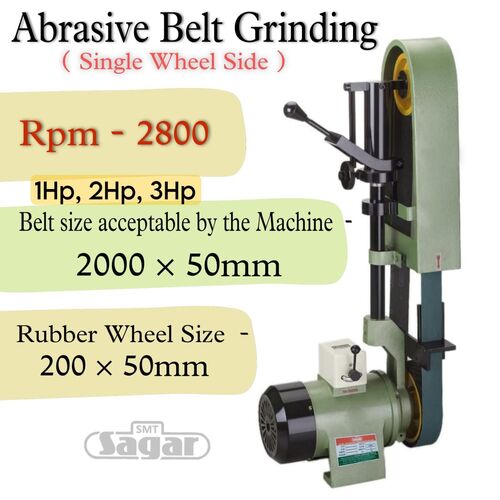
Tell us about your requirement

Price:
Quantity
Select Unit
- 50
- 100
- 200
- 250
- 500
- 1000+
Additional detail
Mobile number
Email


SAGAR MACHINE TOOLS
GST : 24EWJPS9029A1ZE
GST : 24EWJPS9029A1ZE
J.K Industrial Area, Survey No.149, Plot No.11, Kotda Sangani Main Road, Rajkot - 360022, Gujarat, India
Phone :08045476623

 Send Inquiry
- LATHE MACHINE
- Press Brake Machine
- Blade Grinding Machine
- Circle Cutting Machine
- Circular Saw Machine
- Industrial Drill Machine
- Jigsaw Machine
- Milling Cum Drilling Machine
- Pipe Bending Machine
- Section Bending Machine
- Shearing Machine
- Grinder
- Sheet Grooving Machine
- Welding Machine
- Air Compressor
- Pressure Pump
- Air Blower Machine
- Bench Grinder Machine
- Tapping Machinery
- Tapping Cum Drilling Machines
- Radial Drill Machinery
- Slotting Machines
- Hack Saw Machine
- Cutt Off Machine
- Concrete Block Cutting Machinery
- Milling Machinery
- Sander Machinery
- Glass Polishing Machine
- Shaping Machine
- Belt Grinding Machinery
- Bandsaw Machinery
- Turning And Facing
- Abrasive Belt Grinding
- Belt Grinder Polisher
- Hydraulic Press
- Power Press
- Press
- Hydraulic Multi Cutter Machine
- Stapler
- Jenny
 Send Inquiry
 Send SMS
SAGAR MACHINE TOOLS
All Rights Reserved.(Terms of Use)
Developed and Managed by Infocom Network Private Limited.
Developed and Managed by Infocom Network Private Limited.

