

Call us now
08045476623

 Send Inquiry
Abrasive Belt Grinding
Price 36000 INR/ Unit
MOQ : 1 Unit
Abrasive Belt Grinding Specification
- Frame Type
- Rigid Welded Structure
- Voltage
- 220-240V AC
- Model No
- ABG-1240
- Motor Power
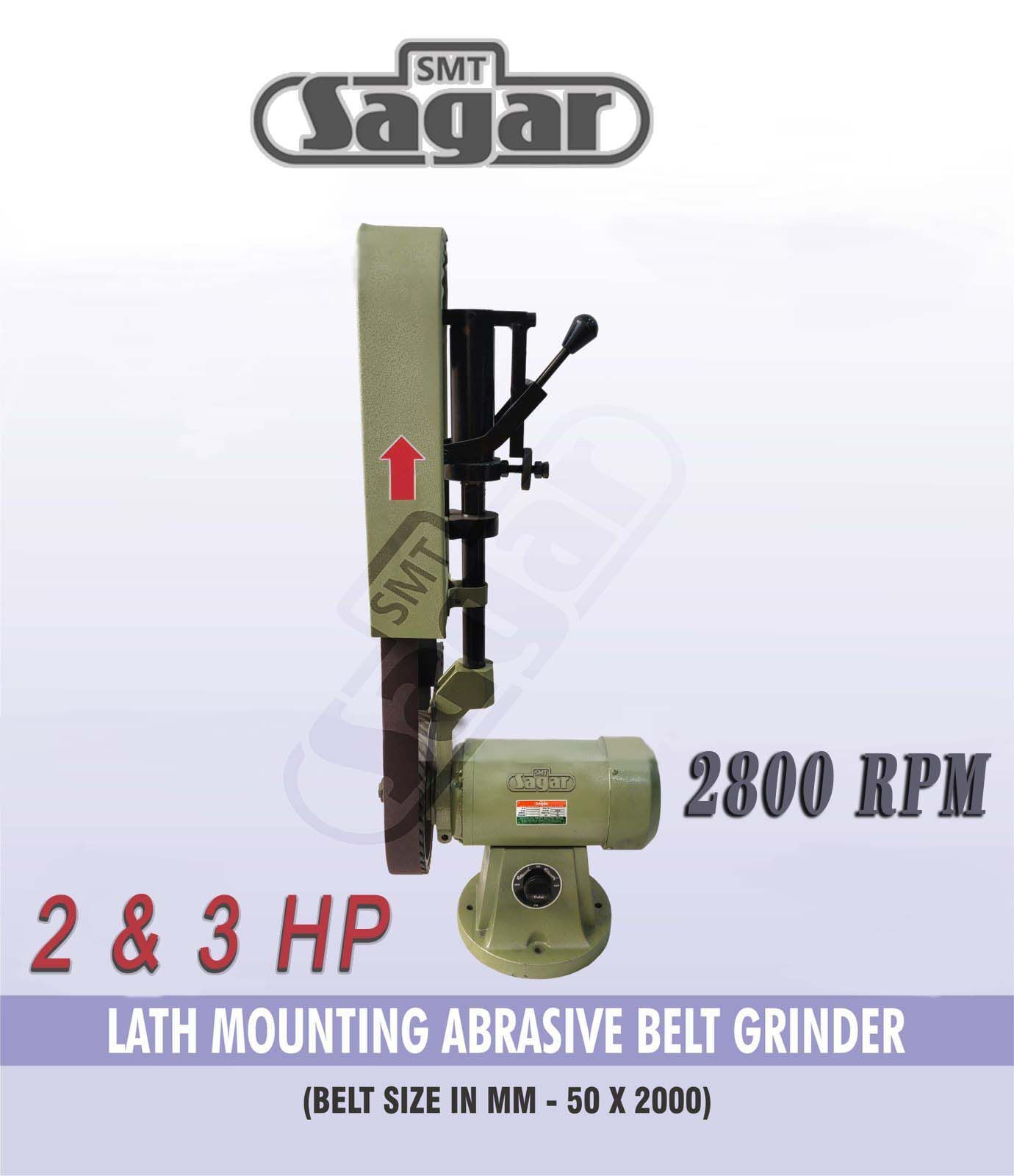
- 2 HP
- Cooling System
- Optional external cooling
- Drive
- Belt Drive
- Features
- Heavy duty frame, Easy belt change, Adjustable work support
- Operating Temperature
- 5C - 45C
- Noise Level
- Below 80 dB
- Lubricating System
- Manual lubrication
- Control System
- Manual Controls
- Frequency
- 50 Hz
- Accuracy
- 0.02 mm
- Power Rating
- 1.5 kW
- Production Capacity
- 40 - 50 pieces per hour
- Machine Type
- Abrasive Belt Grinder
- Product Type
- Abrasive Belt Grinding Machine
- Technology
- Conventional Abrasive Grinding
- Power Source
- Electric
- Operating Type
- Semi-Automatic
- Power
- 2 HP
- Pressure
- Adjustable, as per application
- Surface Treatment
- Coated
- Dimension (L*W*H)
- 1240 mm (L) x 550 mm (W) x 1100 mm (H)
- Weight (kg)
- 120 kg
- Color
- Blue & White
- Usage & Applications
- Industrial metal and wood surface finishing, deburring, polishing
- Belt Speed
- 1400 RPM
- Belt Size
- 50 mm x 2000 mm
- Dust Extraction Port
- Yes, 100 mm dia
- Material Compatibility
- MS, SS, Aluminum, Brass, Wood
- Table Size
- 450 mm x 150 mm
- Belt Tension Adjustment
- Manual Lever
- Protection Grade
- IP54
- Mounting Type
- Floor Standing
- Spindle Lock
- Provided
- Wheel Material
- Aluminum with Rubber Coating
Abrasive Belt Grinding Trade Information
- Minimum Order Quantity
- 1 Unit
- Supply Ability
- 15 Units Per Month
- Delivery Time
- 5 Days
- Sample Available
- Yes
- Main Export Market(s)
- Asia, Australia, Central America, North America, South America, Eastern Europe, Western Europe, Middle East, Africa
- Main Domestic Market
- All India
About Abrasive Belt Grinding
Abrasive Belt Grinder
An abrasive belt grinding machine is a tool that uses abrasive belts to grind and finish workpieces. These machines come in various configurations and designs, depending on the specific application and the type of workpiece being processed. Here are some common features and components found in abrasive belt grinding machines:
Belt Configuration: The machine features a continuous loop of abrasive belt(s), typically made of coated abrasives such as aluminum oxide, silicon carbide, or other abrasive materials.
Drive System: A motor provides the power to rotate the pulleys that drive the abrasive belt. The drive system must be capable of maintaining the desired belt speed for effective grinding.
Belt Tensioning Mechanism: To ensure proper performance, abrasive belts need to be tensioned correctly. Machines usually include a mechanism for adjusting and maintaining the tension of the abrasive belt.
Tracking Mechanism: A tracking system is essential to keep the abrasive belt centered on the machine. This helps prevent the belt from wandering off the pulleys, ensuring consistent and accurate grinding.
Worktable or Workrest: The workpiece is typically placed on a worktable or workrest during grinding. The worktable can be adjustable to accommodate different workpiece sizes and shapes.
Adjustable Tool Rests: Tool rests provide support for the workpiece and can be adjusted to achieve the desired grinding angle and position.
Coolant System: In some applications, especially in metalworking, coolant systems may be integrated into the machine to cool the workpiece and abrasive belt, reducing heat and preventing overheating.
Dust Extraction System: Abrasive grinding generates dust and debris. Many machines are equipped with a dust extraction system to remove these particles, improving visibility, air quality, and safety in the workspace.
Safety Features: Safety is a priority when using abrasive belt grinding machines. Safety features may include emergency stop buttons, machine guarding, and protective covers to prevent operator injuries.
Variable Speed Control: Some machines offer variable speed control, allowing operators to adjust the belt speed based on the specific requirements of the application.
Abrasive Belt Changing System: Depending on the design, the machine may feature a quick and convenient system for changing abrasive belts.
Abrasive belt grinding machines are used in various industries, including metalworking, woodworking, and manufacturing, for tasks such as deburring, surface finishing, and material removal. The specific features and capabilities of these machines can vary, so the choice of a particular machine depends on the application requirements and the type of workpiece being processed.
Versatile Material Compatibility
This industrial belt grinder efficiently handles a range of materials-mild steel, stainless steel, aluminum, brass, and wood-making it suitable for diverse finishing, deburring, and polishing tasks. The adjustable pressure and manual controls allow precise adaptation to specific process requirements.
Reliable Performance and Precision
With a belt speed of 1400 RPM and a heavy-duty construction, the ABG-1240 ensures stable operation and accurate surface treatment, achieving results within 0.02 mm accuracy. The 2 HP motor combined with protective features like IP54 and spindle lock supports consistent industrial use.
Easy Maintenance and Safety Features
The machine incorporates an easy belt change mechanism, manual lever belt tension adjustment, and a spacious work table, which streamlines maintenance and boosts productivity. The dust extraction port and optional cooling system improve working conditions and operational safety.
FAQ's of Abrasive Belt Grinding:
Q: How do I adjust the belt tension on the ABG-1240 abrasive belt grinder?
A: The ABG-1240 features a manual lever for belt tension adjustment. Simply use the lever to achieve the desired tension, ensuring smooth operation and optimal grinding performance for your material.Q: What materials can this abrasive belt grinder process?
A: This machine is compatible with mild steel (MS), stainless steel (SS), aluminum, brass, and wood, making it ideal for a variety of industrial finishing, deburring, and polishing applications.Q: When should I use the dust extraction port, and how is it installed?
A: The 100 mm diameter dust extraction port should be used during grinding to efficiently remove dust and debris, maintaining a clean work environment. Connect it to your facility's dust extraction system for optimal air quality and cleanliness.Q: Where can I install the ABG-1240 belt grinder in my facility?
A: This model is designed as a floor-standing unit with a rigid welded structure, suitable for installation in workshops, manufacturing plants, or industrial finishing areas where surface treatment activities are conducted.Q: What is the process for changing the abrasive belt on this machine?
A: To change the belt, unlock the spindle, release the manual tension lever, and remove the worn belt. Install the new belt, adjust the tension using the lever, and lock the spindle for secure machining.Q: How does the adjustable pressure feature benefit the finishing process?
A: Adjustable pressure allows operators to tailor force according to material type and desired finish, enhancing process efficiency and final surface quality across metals and wood.Q: What are the main advantages of using the ABG-1240 abrasive belt grinder?
A: Key benefits include fast production capability (up to 50 pieces/hour), precision surface finishing (0.02 mm), easy operation with manual controls, robust construction, effective dust management, and versatility across multiple material types.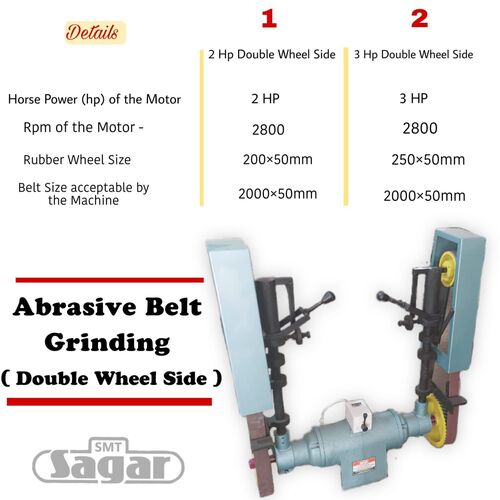
Tell us about your requirement

Price:
Quantity
Select Unit
- 50
- 100
- 200
- 250
- 500
- 1000+
Additional detail
Mobile number
Email


SAGAR MACHINE TOOLS
GST : 24EWJPS9029A1ZE
GST : 24EWJPS9029A1ZE
J.K Industrial Area, Survey No.149, Plot No.11, Kotda Sangani Main Road, Rajkot - 360022, Gujarat, India
Phone :08045476623

 Send Inquiry
- LATHE MACHINE
- Press Brake Machine
- Blade Grinding Machine
- Circle Cutting Machine
- Circular Saw Machine
- Industrial Drill Machine
- Jigsaw Machine
- Milling Cum Drilling Machine
- Pipe Bending Machine
- Section Bending Machine
- Shearing Machine
- Grinder
- Sheet Grooving Machine
- Welding Machine
- Air Compressor
- Pressure Pump
- Air Blower Machine
- Bench Grinder Machine
- Tapping Machinery
- Tapping Cum Drilling Machines
- Radial Drill Machinery
- Slotting Machines
- Hack Saw Machine
- Cutt Off Machine
- Concrete Block Cutting Machinery
- Milling Machinery
- Sander Machinery
- Glass Polishing Machine
- Shaping Machine
- Belt Grinding Machinery
- Bandsaw Machinery
- Turning And Facing
- Abrasive Belt Grinding
- Belt Grinder Polisher
- Hydraulic Press
- Power Press
- Press
- Hydraulic Multi Cutter Machine
- Stapler
- Jenny
 Send Inquiry
 Send SMS
SAGAR MACHINE TOOLS
All Rights Reserved.(Terms of Use)
Developed and Managed by Infocom Network Private Limited.
Developed and Managed by Infocom Network Private Limited.

